
What is the Urbino sacred circuit and why do pilgrims visit?
The historic centre of Urbino is a UNESCO World Heritage Site, inscribed for its Renaissance legacy. Raphael (1483–1520) was born here, and the Ducal Palace, begun in the second half of the 15th century by Federico da Montefeltro, houses the Galleria Nazionale delle Marche.
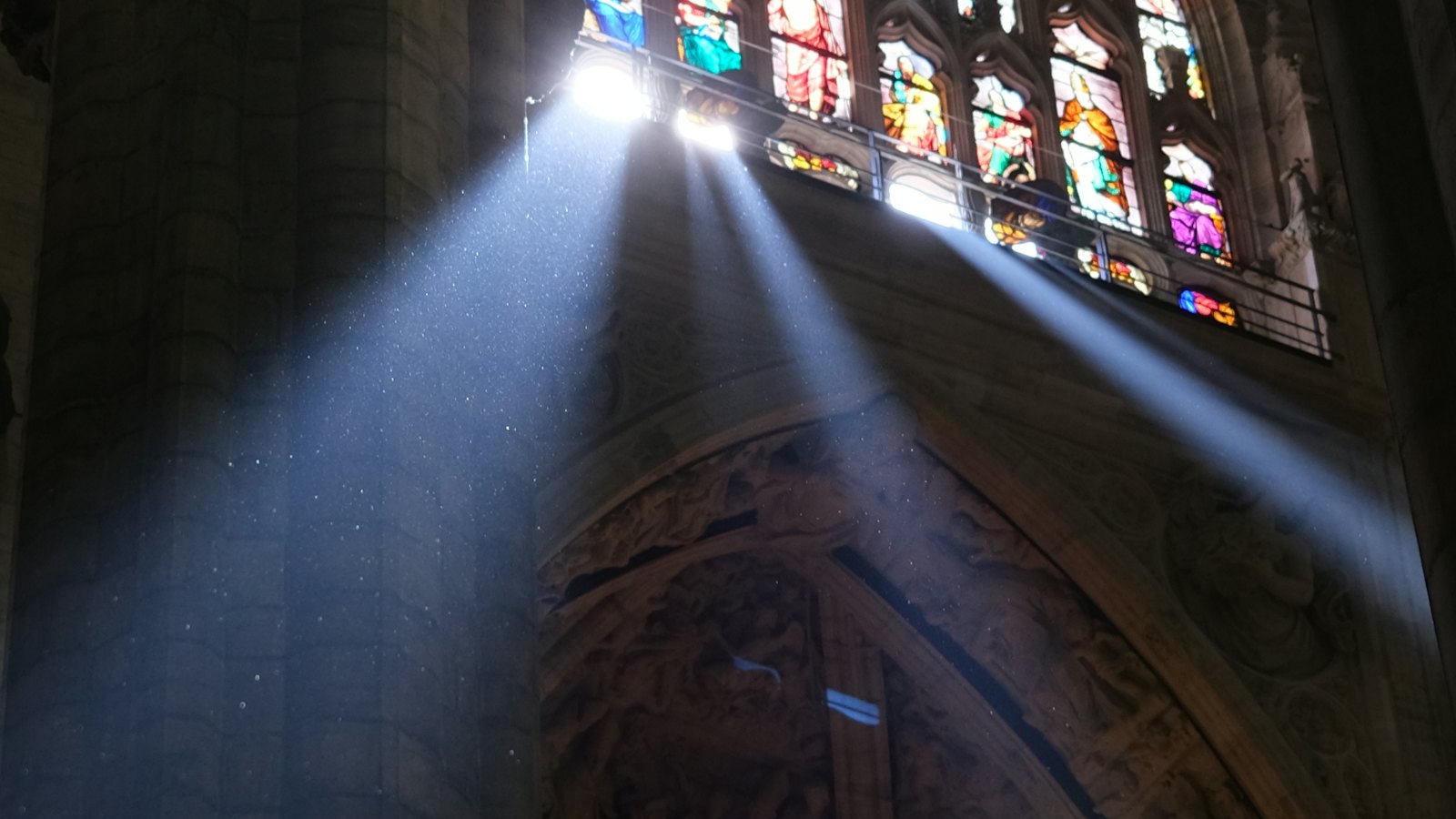
The Cathedral of Santa Maria Assunta is the city’s main place of worship. It was rebuilt in the 15th century on the orders of Duke Federico, to a design by Francesco di Giorgio Martini. After earthquakes damaged the façade and the dome, Camillo Morigia built the neoclassical façade, completed with Giuseppe Valadier’s help, with seven saint statues including Saint Crescentino, the city’s patron. The interior has three naves. The Diocesan Museum, in the old sacristies, holds the church treasure, and a portico leads to the Oratory of the Grotto in the crypt.
Nearby, the Oratory of San Giovanni Battista is a 14th-century chapel on Via Barocci whose fresco cycle was painted in 1416 by the brothers Lorenzo and Jacopo Salimbeni in late Gothic style. It shows scenes from the life of John the Baptist, a Madonna of Humility and a Crucifixion. The Oratory of San Giuseppe stands a few steps away.
How do you get to Urbino?
- By train and bus: Urbino has no railway station. The usual route is by train to Pesaro, then a bus up to Urbino.
- By plane: Ancona’s Raffaello Sanzio Airport and Rimini are the nearest airports; from either, change at Pesaro.
- By car: the historic centre is a restricted traffic zone, so park outside the walls. Borgo Mercatale is the main car park and bus hub, with a lift to the upper town.
- Cathedral address: Via Puccinotti 29, 61029 Urbino.
When is the cathedral open?
At the time of writing, the cathedral is listed as open every day from 7:30 to 20:00 — check the official website before visiting. Its telephone number is +39 0722 350018.
The Oratory of San Giovanni is small, so check its visiting hours locally before going. Dress modestly in all churches and oratories, and wear comfortable shoes, as the streets are steep. Allow one to two days to include the Ducal Palace, the House of Raphael and the oratories at an easy pace.